The Most Confusing Padel Rules Answered
FAQ
– Can I use the glass walls?
– Can you hit the ball off your own glass wall
– What is the key difference between the glass walls and the wire fence?
What is the key difference between the glass walls and the wire fence?– Do you need a specific racket to play padel?
Do you need a specific racket to play padel?– Do you need specific padel shoes?
Do you need specific padel shoes?– What happens if the ball hits my body?
What happens if the ball hits my body?– How do I serve correctly?
How do I serve correctly?– Can I leave the court to hit a ball?
Can I leave the court to hit a ball?– What is a "Golden Point"?
What is a "Golden Point"?– Basic rules of the game
Basic rules of the game– Point system
Point system– Common mistakes
Common mistakes– Tips for beginners
Tips for beginnersCan I use the glass walls?
Yes, absolutely! The glass walls are a key part of the game and using them correctly is what makes padel so unique and strategic. You can hit the ball after it has bounced on the court and then made contact with a glass wall. This allows for incredible defensive shots and can create some very tricky angles for your opponents. It’s important to remember, however, that the ball must always bounce on the ground on your side of the court before it hits a glass wall. If the ball hits the glass wall first, without bouncing on the ground, it is considered a fault and you lose the point. Mastering the padel glass walls rule is essential for improving your game and utilizing the full potential of the court.
Can you hit the ball off your own glass wall?
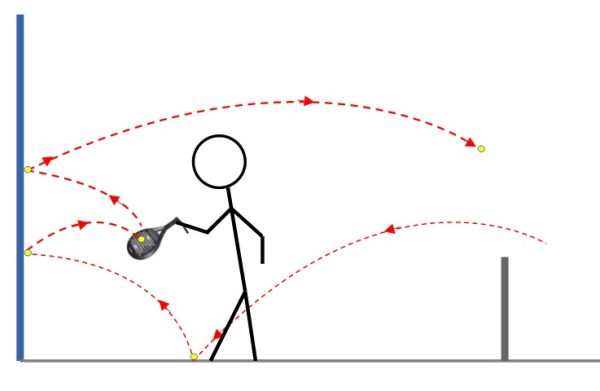
Yes, this is one of the most interesting and unique rules in padel! During a rally (not on a serve), you can hit the ball off your own glass wall so that it bounces and goes over the net to the opponent’s side.
This shot is often used for defensive purposes or to create a tricky angle. For example, if your opponent hits a ball that is a bit too far behind you, you can use your back wall to rebound it back into play. It’s a great way to stay in the point and surprise your opponents with an unexpected shot.
Just remember that the ball can only touch your glass wall after it has bounced on your side of the court. You cannot hit the ball directly into your own glass wall to send it over the net without it first bouncing on the ground.
What is the key difference between the glass walls and the wire fence?
The key difference between the glass walls and the wire fence is how you can use them to your advantage. While both surfaces are part of the court boundaries and can be used to keep a ball in play, only the glass walls are a strategic tool that you can deliberately use to set up shots and control the point. The wire fence, on the other hand, is a defensive surface of last resort.
Here’s a breakdown of the differences in how you can use them strategically:
Glass Walls: A Strategic Asset
The glass walls are a core part of padel strategy. They are like a third dimension to the court.
- Deliberate Rebounds: You can deliberately let a ball bounce off your own glass back wall to set up a return shot. This is a fundamental part of padel. It allows you to buy time, create a better angle for your shot, or even surprise your opponents by letting the ball come off the wall and hit it at an unexpected moment.
- The “Double Wall” Shot: A classic padel shot involves hitting the ball so that it bounces on your opponent’s side and then hits both their back and side walls, making it incredibly difficult for them to return. This is a key offensive strategy that relies entirely on the glass.
- The Serve: The glass walls are an essential part of a legal serve. A serve that hits the opponent’s glass wall after bouncing is perfectly fine and is often used to control the direction and speed of the ball.
Wire Fence: A Defensive Boundary
The wire fence, or mesh, is not a strategic tool for offense. It is a boundary that you only interact with out of necessity.
- No Deliberate Shots: You can never hit the ball directly into your own wire fence to try and send it to the other side. This is an immediate fault and you lose the point. The only time the ball legally touches the wire fence is on a very deep shot from your opponent.
- Last Resort Defense: If your opponent hits a very deep, powerful shot that bounces on your side and is heading straight for the fence, you can still hit it back. You would be hitting it after it has rebounded off the fence. This isn’t a strategic choice; it’s a reaction to keep the point alive.
- The Serve: Unlike the glass walls, a serve that hits the opponent’s wire fence after the bounce is an immediate fault. This means you must be very careful with the accuracy of your serves to avoid the fence.
In short, the glass walls are like an extra teammate that you can use to control the ball’s movement and set up plays, while the wire fence is more like a strict boundary—a place you want to avoid hitting the ball into directly, but a place you can still play the ball from if your opponent’s shot goes there.
Do you need a specific racket to play padel?
Do you need a specific racket to play padel?Yes, you absolutely need a specific racket to play padel. You cannot use a tennis or squash racket. Padel rackets are a fundamental part of the sport, designed to be smaller, thicker, and without strings, which is why they feel so different.
When choosing a racket, you should consider a few key things:
- Shape: Rackets come in different shapes—round, teardrop, and diamond—each designed for a different style of play. A round racket is great for control, a diamond shape offers more power, and a teardrop is a good mix of both.
- Material: The core of the racket (often foam or EVA rubber) and the face material (fiberglass or carbon fiber) affect how the ball feels and rebounds.
- Weight and Balance: A heavier racket offers more power, while a lighter racket is easier to control. The balance point also affects how it feels in your hand.
Choosing the right racket can feel overwhelming, especially for a beginner. That’s why we’ve created a helpful tool to make it simple.
To find the perfect racket for your game, try our Padel Racket Finder Tool here.
If you want to compare different models side-by-side, use our Padel Racket Comparison Tool

Do you need specific padel shoes?
Do you need specific padel shoes?Yes, while you can technically get by with regular sports shoes for your first time on the court, you will absolutely want to invest in specific padel or clay court tennis shoes. They are designed with key features that make them safer and more effective for playing padel.
Here’s why they are so important:
- The Sole: This is the most critical feature. Padel courts are often made with sand mixed into the artificial grass. Padel shoes have a special sole with a herringbone or omni-directional pattern. This gives you the right mix of grip and slide, allowing you to move quickly, change direction, and avoid injuries from slipping or getting your foot stuck.
- Lateral Support: Padel involves a lot of quick side-to-side movements and sudden stops. Padel shoes are built with reinforced sides and extra support to protect your ankles and feet from rolling over during these lateral motions.
- Durability: The frequent stops and starts on the rough court surface can quickly wear down regular trainers. Padel shoes are made with reinforced materials in high-wear areas to ensure they last longer.
Choosing the right padel shoe can be a game-changer for your performance and safety. To help you find the perfect pair, we’ve created a handy tool.
To discover the best padel shoes for your playing style, try our Padel Shoe Finder Tool here.
If you want to compare different brands and models to see which one is right for you, use our Padel Shoe Comparison Tool.

What happens if the ball hits my body?
If the ball hits your body, you lose the point.
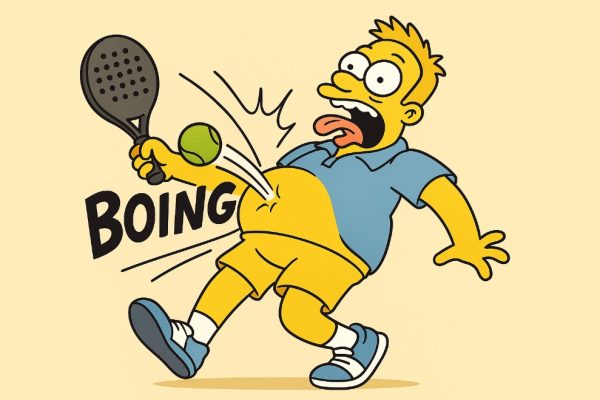
In padel, the only thing you are allowed to use to hit the ball is your racket. If the ball touches any part of you—your hand, your arm, your leg, your torso, or even your clothing—the point is over immediately, and the point is awarded to your opponents.
This is a fundamental rule that applies regardless of whether the contact was accidental or on purpose. It doesn’t matter if you were trying to get out of the way or if you got hit by a powerful shot from your opponent. The moment the ball touches your body, the rally is finished.
This is why players sometimes aim a hard smash directly at their opponents’ bodies. It’s a legal and effective tactic to win the point, as it’s very difficult for the other player to avoid getting hit by a fast-moving ball.
How do I serve correctly?
Serving correctly in padel is one of the most important things to get right, as it’s the only time in the game you have full control of the ball. It’s not as complex as a tennis serve, but there are a few key rules you must follow.
Here’s a step-by-step guide on how to serve correctly:
- Stand in the right place: You must stand behind the service line and between the center service line and the side wall. Both of your feet must be behind the line when you hit the ball.
- Bounce the ball: You must bounce the ball on the ground behind the service line before you hit it. You cannot just toss it into the air and hit it.
- Hit the ball below your waist: This is a crucial rule that is very different from tennis. The moment you hit the ball with your racket, the point of contact must be at or below your waist level. A common mistake for new players is to hit the ball too high.
- Hit it diagonally: You must serve the ball diagonally into the opponent’s service box (the square area on the opposite side of the court).
- One bounce in the service box: The ball must bounce once inside the opponent’s service box.
- Avoid the wire fence: After the ball bounces in the service box, it can legally hit the glass walls, but it cannot hit the wire fence. If it hits the fence after the bounce, it’s a fault.
- Two chances: Just like in tennis, you get two chances to make a legal serve. If you mess up your first serve (a “fault”), you get a second attempt. If you fault a second time, it is a “double fault,” and you lose the point.
Can I leave the court to hit a ball?
Yes, in many cases, you can leave the court to hit a ball. This is one of the most exciting and unique aspects of padel, and it often leads to spectacular, athletic plays.
When You Can Leave the Court
The key is that the ball must be in play. This happens when:
- An opponent hits a shot so hard that it bounces on your side of the court and then goes over the back glass wall and out of the court’s doors.
- The ball bounces on your side and then exits the court through the side doors.
In these situations, you are allowed to run out of the court to hit the ball back to your opponents’ side.
The Rules You Must Follow
Even when you leave the court, the basic rules of a rally still apply:
- You must hit the ball before it bounces a second time on the ground (this includes outside the court).
- You can only use your racket to hit the ball.
- You cannot hit the ball into any object outside the court (like a chair, a wall, or the ceiling) and expect it to be a legal shot.
This “out of court” rule adds a fantastic element of surprise and allows for some of the most memorable moments in the sport. It’s a great example of how padel’s design encourages continuous, fast-paced rallies.
What is a "Golden Point"?
The “Golden Point” is a specific scoring rule used in padel that is designed to make matches faster and more exciting. It is an alternative to the traditional “advantage” scoring system.
Here’s a simple explanation of how it works:
- The Scenario: A game is tied at 40-40, which in tennis and some padel matches is called “deuce.”
- The Rule: Instead of a team needing to win by two consecutive points (like in the “advantage” system), the very next point is the Golden Point.
- The Outcome: The team that wins this one single point wins the entire game. It’s a “sudden death” situation.
Key Aspects of the Golden Point
- Receiver’s Choice: When the Golden Point is in effect, the team receiving the serve can choose which player will receive the serve (either on the right or left side of the court). This adds a strategic element to the game.
- Faster Matches: The main reason for using the Golden Point is to avoid long, drawn-out games that can have multiple deuces and advantages. This makes matches more predictable in length, which is great for tournaments and for TV audiences.
- High Pressure: Because the entire game rests on a single point, every Golden Point is a moment of very high pressure and intensity, both for the players and the spectators.
So, in short, a Golden Point is the single, decisive point that is played when the score is tied at 40-40, with the winner of that point winning the game.
Basic rules of the game
- The game is always played in doubles (two players per side).
- The ball may only bounce once on your side of the court.
- The ball is valid if it touches the glass wall after bouncing.
- The ball is “out” if it touches the fence or hits a wall before bouncing.
- Volleys (shots without a previous bounce) are allowed—except when serving.
Point system
Scoring is the same as in tennis:
- 15 – 30 – 40 – Game
- At 40:40 (“deuce”), a team must win two points in a row. (unless you play Golden Point rule instead)
- The team that reaches 6 games with a 2-game lead first wins the set.
- A match is usually played in a best-of-3 format (2 winning sets).
Common mistakes
- Overhead serve (not allowed).
- Letting the ball bounce twice.
- Hitting the ball into the fence.
- Returning the serve before it bounces.
Tips for beginners
- Aim your serve flat into the corner of the court.
- Use the glass wall defensively—it gives you time.
- Always communicate with your partner—padel is a team game.
NOW LETS GO!!!